
An Indian-American Republican leader has questioned the characterisation of Senator Edward Kennedy, who died last week, as an "unsung hero" of the Indo-US civilian nuclear deal.
In the wake of the movement in recent days with speculation rife that Prime Minister Singh is willing to go ahead with the deal even if the Left allies in the coalition withdraw their support, the Bush administration -- which some perceived was a totally unrealistic statement, but which sources said was consequent to indications from New Delhi that there would be movement on the deal from its current moribund status -- vowed to work to complete the deal.
The message is said to have been conveyed to a small group of top Indian-American community leaders on Monday by senior White House officials, a source privy to the goings on told PTI. "We are confident that just like last time, the bill will be passed by a substantial majority. With that a new era will begin for India's nuclear programme," the officials were quoted by the source as saying.
Congress spokesperson Abhishek Singhvi said the failure to consummate the Indo-US nuke deal would not jeopardise overall US-India relations. "It's very, very important to emphasise that India-US relations are multi-dimensional, multi-layered, multi-faceted. The Indo-US nuclear deal was neither the beginning and nor is it going to be the end of that," he said.

Indian policymakers must realise that in buying small quantities of equipment, it becomes hard to start manufacturing them in India, explains Ajai Shukla.
He said the USINPAC delegation would meet Bhartiya Janata Party President Rajnath Singh and leaders of the Left party who have expressed their apprehension over the nuclear deal.
The Obama Administration is awaiting the advent of the new government in India to engage New Delhi on the final implementation details of the US-India civilian nuclear deal, the Acting point person for South Asia at the US Department of State has said.
There's a strong sense inside the Democratic leadership that if you care about India, now is the time to stand up for it, says Graham Wisner, counsel at the top international lobbying firm Patton Boggs.
Ambassador Sen will meet with the PM and other senior ministers, as well as scientists.
'The fact is that Democrats have obstructed the passage of this crucial agreement every step of the way,' South Carolina Republican Joe Wilson said.

Reports (not denied by India) that the USA had 'for the first time provided real-time details to their Indian counterparts on the Chinese positions and force strength in advance of a PLA incursion' into Tawang at the LAC in December 2022, helping India thwart China's expansionist designs, show how operationally effective the USA-India friendship has become on the ground. A engaging excerpt from Sreeram Chaulia's must-read new book, Friends: India's Closest Strategic Partners.
We need to report to the Congress about the India-Iran ties. India does not have to worry about this, says US official.
Speaking to media persons after the hearing where senior Bush Administration officials testified on the agreement, Dodd, asked the first question by rediff.com as to the bottom line vis-a-vis the possible approval of the deal by Congress by September 26, said, "The evidence in the past has been that there is a strong desire to reach agreement, and a clear understanding of the value and importance of this."
"Exactly two years later, the two nations have not only reached an agreement, but created a lifelong partnership between two nations that are committed to democratic principles and the idea of energy independence," he said.
Leader of the delegation B J Panda of the Biju Janata Dal said, "We still have the last mile left before the closure of the civilian nuclear deal."
In what diplomatic observers have described as "a make or break" round of negotiations, senior US and Indian officials held several hours of intense discussions at the State Department on Tuesday in an attempt to seal the 123 Agreement.
United States Assistant Secretary of State for South and Central Asian Affairs Robert O Blake, the Obama administration's point man for the subcontinent, still can't get over the Bharatiya Janata Party's opposition to the US-India civilian nuclear deal, despite the fact that it initiated and championed this accord during the time it was in power.
US Senator John Cornyn, the founder and co-chair of the Friends of India Caucus in the US Senate with Senator Hillary Rodham Clinton, has exhorted Prime Minister Manmohan Singh not to throw in the towel on the US-India civilian nuclear deal. Cornyn also urged Dr Singh to try and resurrect the deal from the life-support it is on now.
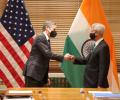
The legislative amendment was passed on Thursday by voice vote as part of an en bloc (all together as a single unit) amendment during floor consideration of the National Defence Authorisation Act (NDAA).

The beauty of the relationship between the two countries is that they agree to disagree and perhaps that is the strongest bond between the two governments and their relationships, notes Rup Narayan Das.

'President-elect Biden, in particular, has deep knowledge of, and experience with, dealing with India, serving as a custodian and champion of the relationship long before it was fashionable to do so.'
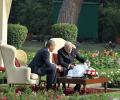
'One thing I've learned about nuclear power is that these are not fast kind of time-lines.'
Emphasising that the reprocessing right was "absolutely necessary" for India, Mukherjee maintained that the government would not like the nuclear cooperation agreement to have any impact on the country's indigenous strategic programme.
"We can and will finish that bill before we leave," a confident Senate Majority Leader Leader Bill Frist said.

"A Biden administration will be mostly positive for India," said Rick Rossow from the Centre for Strategic and International Studies think tank. "I expect most positive areas of cooperation -- notably defence -- to be maintained," he said.
How do you see India-US relations following the reverses for the Republicans? Will the nuclear deal become a casualty?
A bipartisan group of US lawmakers comprising erstwhile and current co-chairs of the Congressional Caucus on India and Indian-Americans have circulated a letter among their colleagues expressing their strong support for the US-India civilian nuclear agreement and included in their 'Dear Colleague' letter a copy of the September 12 Washington Post editorial titled 'Yes for an Answer: Why Congress should expedite approval of the US-India nuclear accord."

A proposed nuclear deal aims to stop Pakistan from building small tactical nuclear weapons that could fall into terrorist hands.
N-tests: India will pay if it violates moratorium
China, one of the five permanent members of the UNSC had taken the lead in drafting 1172 resolution.

Ron Somers, founder and CEO of India First Group and the former President of leading business advocacy group US-India Business Council said that when Lok Sabha election results are declared on June 4, "I believe that Narendra Modi will win Parliament by the largest majority ever recorded in the country's history.

'With Trump, the relationship was very transactional, whereas with President Biden it is very structured.'
It is time Indian Parliament woke up to the need for the nuclear deal to be subjected to parliamentary scrutiny and approval in the Indian national interest
 © 2026 Rediff.com - Advertise with us - Disclaimer - Privacy Policy - Sitemap - Feedback - About us - Terms of use - Grievances